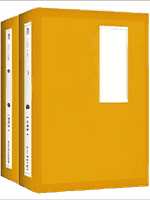
| 作 者: | 圣地亚哥·博纳尔 |
| 出版社: | 哈尔滨工业大学出版社 |
| 丛编项: | 国外很好物理著作原版系列 |
| 版权说明: | 本书为出版图书,暂不支持在线阅读,请支持正版图书 |
| 标 签: | 暂缺 |
| ISBN | 出版时间 | 包装 | 开本 | 页数 | 字数 |
|---|---|---|---|---|---|
| 未知 | 暂无 | 暂无 | 未知 | 0 | 暂无 |
Preface to the second edition
Acknowledgements
Author biography
1 Rays,matrices,and transfer maps
1.1 Paraxial approximation
1.2 Thin lens
1.3 Thick lens
1.4 Transfer maps
1.5 Computer resources
References
2 Linear magnetic lenses and deflectors
2.1 Magnetic rigidity,momentum,and cyclotron frequency
2.2 Solenoid focusing
2.3 Quadrupole focusing
2.4 The Kerst-Serber equations and weak focusing
2.5 Dipoles and edge focusing
2.6 Effective hard-edge model of fringe fields in focusing magnets
2.7 Computer resources
References
3 Periodic lattices and functions
3.1 Solenoid lattice
3.2 FODO lattice
3.3 Lattice and beam functions
3.4 Uniform-focusing('smooth') approximation
3.5 Linear dispersion
3.6 Momentum compaction,transition gamma,and chromaticity
3.7 Computer resources
References
4 Emittance and space charge
4.1 Liouville's theorem and emittance
4.2 The Kapchinskij-Vladimirskij(K-V)and thermal distributions
4.3 Thermodynamics of charged-particle beams?
4.4 The K-V envelope equations and space-charge (SC)
intensity parameters
4.5 Incoherent space-charge (SC) betatron tune shift
4.6 Coherent tune shift and Laslett coefficients
4.7 Computer resources
References
5 Longitudinal beam dynamics and radiation
5.1 Radio-frequency (RF) linacs [1]
5.2 Beam bunch stability and RF bucket
5.3 Synchrotron radiation [1]
5.4 Insertion devices and free-electron lasers (FELs) [1]
5.5 Longitudinal beam emittance and space charge
5.6 Computer resources
References
6 Envelope matching, resonances, and dispersion
6.1 Cell envelope FODO matching
6.2 Source-to-cell envelope matching
6.3 Betatron resonances
6.4 Betatron resonances and space charge
6.5 Dispersion and space charge
6.6 Computer resources
References
7 Linacs and rings (examples),closed orbit, and beam cooling
7.1 Examples of linacs
7.2 Examples of rings
7.3 Closed orbit and correction
7.4 Beam cooling
7.5 Computer resources
References
Appendix: Computer resources and their use
编辑手记