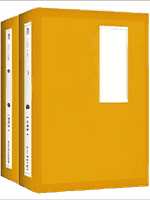
| 作 者: | 梅耶 |
| 出版社: | 电子工业出版社 |
| 丛编项: | |
| 版权说明: | 本书为出版图书,暂不支持在线阅读,请支持正版图书 |
| 标 签: | VC++ |
| ISBN | 出版时间 | 包装 | 开本 | 页数 | 字数 |
|---|---|---|---|---|---|
| 未知 | 暂无 | 暂无 | 未知 | 0 | 暂无 |
Introduction(新增批注共2条) 1
Chapter 1: Accustoming Yourself to C++
(新增批注共12条) 11
Item 1: View C++ as a federation of languages. 11
Item 2: Prefer consts, enums, and inlines to#defines. 14
Item 3: Use const whenever possible. 19
Item 4: Make sure that objects are initialized before they’reused. 28
Chapter 2: Constructors, Destructors, and Assignment
Operators(新增批注共9条) 37
Item 5: Know what functions C++ silently writes andcalls. 37
Item 6: Explicitly disallow the use of compiler-generatedfunctions
you do not want. 41
Item 7: Declare destructors virtual in polymorphic baseclasses. 43
Item 8: Prevent exceptions from leaving destructors. 49
Item 9: Never call virtual functions during construction ordestruction. 53
Item 10: Have assignment operators return a reference to*this. 57
Item 11: Handle assignment to self in operator=. 58
Item 12: Copy all parts of an object. 62
Chapter 3: Resource Management(新增批注共7条) 66
Item 13: Use objects to manage resources. 66
Item 14: Think carefully about copying behavior inresource-managing classes. 71
Item 15: Provide access to raw resources in resource-managingclasses. 74
Item 16: Use the same form in corresponding uses of new anddelete. 78
Item 17: Store newed objects in smart pointers in standalonestatements. 80
Chapter 4: Designs and Declarations(新增批注共28条) 83
Item 18: Make interfaces easy to use correctly and hard to useincorrectly. 83
Item 19: Treat class design as type design. 89
Item 20: Prefer pass-by-reference-to-const topass-by-value. 91
Item 21: Don’t try to return a reference when you must return anobject. 96
Item 22: Declare data members private. 101
Item 23: Prefer non-member non-friend functions to memberfunctions. 105
Item 24: Declare non-member functions when type conversionsshould
apply to all parameters. 109
Item 25: Consider support for a non-throwing swap. 113
Chapter 5: Implementations(新增批注共42条) 122
Item 26: Postpone variable definitions as long aspossible. 122
Item 27: Minimize casting. 125
Item 28: Avoid returning “handles” to objectinternals. 133
Item 29: Strive for exception-safe code. 137
Item 30: Understand the ins and outs of inlining. 146
Item 31: Minimize compilation dependencies betweenfiles. 152
Chapter 6: Inheritance and Object-Oriented Design
(新增批注共39条) 162
Item 32: Make sure public inheritance models “is-a.” 163
Item 33: Avoid hiding inherited names. 169
Item 34: Differentiate between inheritance of interface andinheritance of
implementation. 174
Item 35: Consider alternatives to virtual functions. 183
Item 36: Never redefine an inherited non-virtualfunction. 192
Item 37: Never redefine a function’s inherited default parametervalue. 194
Item 38: Model “has-a” or is-implemented-in-terms-of” throughcomposition. 198
Item 39: Use private inheritance judiciously. 201
Item 40: Use multiple inheritance judiciously. 207
Chapter 7: Templates and Generic
Programming(新增批注共28条) 215
Item 41: Understand implicit interfaces and compile-timepolymorphism. 216
Item 42: Understand the two meanings of typename. 220
Item 43: Know how to access names in templatized baseclasses. 225
Item 44: Factor parameter-independent code out oftemplates. 230
Item 45: Use member function templates to accept “all compatibletypes.” 235
Item 46: Define non-member functions inside templates whentype
conversions are desired. 240
Item 47: Use traits classes for information abouttypes. 245
Item 48: Be aware of template metaprogramming. 251
Chapter 8: Customizing new and delete
(新增批注共17条) 258
Item 49: Understand the behavior of the new-handler. 259
Item 50: Understand when it makes sense to replace new anddelete. 267
Item 51: Adhere to convention when writing new anddelete. 272
Item 52: Write placement delete if you write placementnew. 276
Chapter 9: Miscellany(新增批注共8条) 283
Item 53: Pay attention to compiler warnings. 283
Item 54: Familiarize yourself with the standard library, includingTR1. 284
Item 55: Familiarize yourself with Boost. 290
Appendix A: Beyond Effective C++ 295
Appendix B: Item Mappings Between Second
and Third Editions 299
Index 302