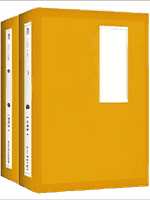
| 作 者: | 斯潘纳 |
| 出版社: | 东南大学出版社 |
| 丛编项: | |
| 版权说明: | 本书为出版图书,暂不支持在线阅读,请支持正版图书 |
| 标 签: | 计算机/网络 软件工程/开发项目管理 |
| ISBN | 出版时间 | 包装 | 开本 | 页数 | 字数 |
|---|---|---|---|---|---|
| 未知 | 暂无 | 暂无 | 未知 | 0 | 暂无 |
1 Introduction
1.1 The Arduino Project
1.2 Book Structure and Target Audience
2 Structure and Function of the Hardware
2.1 Lots to Choose From: Arduino Versions
2.2 Available for all Purposes: Shields
2.2.1 Proto Shield
2.2.2 Motor Shield
2.2.3 Ethernet Shield
2.3 Nothing Happens without Power: the Power Supply
2.4 The Microcontroller: Heart of the Arduino
2.5 The PC Connection: USB interface
3 Development Environment and Programming Basics
3.1 Integrated Development Environment (IDE)
3.2 For Linux Users: Arduino IDE Under Ubuntu
3.3 Simple Beginnings: The Warning Light
3.4 General Structure of an Arduino Sketch
3.5 Basic Elements of the C Programming Language for Arduino
3.6 Program Structures
3.7 Arduino-Specific Functions
3.8 Arduino Punctuation: Syntax Elements
3,9 Data Storage Elements: Variables
3.10 The Art of Math: Operators
3.11 To Be Clear: Logical Operators
3.12 Unchanging Parameters: Constants
3.13 Dealing with Related Data of the Same Type: Arrays
3.14 Program Control Structures
3.15 Controlling Timing
3.16 Mathematical Functions
3.17 Random numbers
3.18 Extending the Options: Adding Libraries
4 Electronic Components and Low-Cost "Freeduinos"
4.1 Breadboards: Simple and Effective without Soldering
4.2 Prototyping Boards: Durable Construction without Chemicals
4.3 Low-Cost 'Freeduinos'
4.4 Arduino and Its Helpers: Basic Electronic Components
4.4.1 USB Cable
4.4.2 Resistors
4.4.3 Capacitors
4.4.4 Potentiometers
4.4.5 LEDs
4.4.6 RGB LEDs
4.4.7 Switches
4.4.8 Silicon Diodes
4.4.9 Transistors
5 Hello World
5.1 Cut to the Chaser
5.2 It Gets Brighter: Controlling Power LEDs
5.3 POVino: Persistence-of-Vision Display
6 Displays and Display Techniques
6.1 Bar Graph Display: The Classic for Measurement Applications
6.2 Simple and Cheap: 7-Segment Displays
6.3 4-Digit, 7-Segment Displays: A Key Component for Instrumentation
6.4 Mini Monitor for Signs and Graphics: The LED Dot Matrix
6.5 Dot Matrix Display as a Two-Digit Digital Display
6.6 Micro Learns to Write: Alphanumeric Display
6.7 The LCD
7 Measurement and Sensors
7.1 Flexible and Easy to Read: An LED Voltmeter
7.2 Volt / Ammeter: Precise Instrument for the Hobbyist's Lab
7.3 Kiloohmmeter for Specific Applications
7.4 No More Faulty Electrolytic Capacitor Woes: The 'Elcaduino' Tester ..
7.5 'Picofaraduino': Measuring Smaller Capacitances
7.6 'Transistino': Transistor Tester ~
7.7 A Simple NTC Thermometer
7.8 Hot or Cold? Temperature Measurement Using the AD22100
7.9 Remote Thermometer
7.10 'Thermoduino': Precision Thermometer with 7-Segment Display
7.11 When Are We Most Comfortable? - The Hygrometer
7.12 'Battduino': Capacity Measurement for Rechargeable Batteries
7.13 Optical Sensors: Important for More than Just Photography
7.14 Reflex Light for Geocaching
7.15 For Professional Photographers: A Digital Light Meter
7.16 Home 'Radar Station": Distance Measurement Using Ultrasound
8 Timers, Clocks and Interrupts
8.1 Morning and Night Fun: Grand Prix Toothbrush Timer
8.2 Practical and Accurate: Digital Clock with LED Display
8.3 Who's Faster? A Reaction Timer
8.4 'Timerino': Universal Timer with a 7-Segment Display
8.5 Plug-in Timer to Make Life Easier
8.6 Atomic Precision: The DCF77 Radio Clock
8.7 Output of Time and Date to the Serial Interface
8.8 Stand-Alone DCF77 Clock with LCD Display
9 Interfaces
9.1 Universal and Simple: The I2C Interface
9.2 When We Run Out of Pins: Port Expansion
9.4 Hexadecimal Debugger Display Using a 2-Digit, 7-Segment Display.
9.5 LCD Control via I2C Using the PCF8574
9.6 This Time, Fully Digital: The LM75 Thermometer
9.7 Power-Saving: Real-Time Clock with Date Display
9.8 Alter Including The IRremote Wireless, Practical, Quick: The IR Interface
9.9 'Lampino': An IR-Controlled RGB Lamp
9.10 Timely Luxury: An IR-Controlled Digital Clock
9.11 Optimal for Microcontrollers: The PS/2 Interface
9.12 Keyboard and Mouse as Universal Input Devices
9.13 A Complete Microcomputer with LCD Monitor and Keyboard
10 Sounds and Synthesizer
10.1 Simple Tones
10.2 Transducers and Amplifiers
10.3 Fast PWM Makes It Happen: Not Just tones, But Sound Waves
10.4 Theremin: The Contactless Musical Instrument
10.5 Audio Processing
10.5.1 VCO: A Tunable Sine Wave Source
10.5.2 Digital Signal Processing
10.6 Sound Cloud: A Digital Synthesizer
11 Digital Control Techniques
11.1 Control Types
11.1.1 P Controller
11.1.2 I Controller
11.1.3 PI Controller
11.1.4 PD Controller
11.1.5 PID Controller
11.2 Optimum Workstation Lighting: Digital Illumination Control
11.3 A Classic of Control Theory: The Gravity Compensator
12 Physical Computing
12.1 Servos Control the World
12.2 'Photino': 2D Camera Swivel
12.3 'Craning': Mouse-Controlled Crane
13 Processing
13.1 Arduino and Processing: A Formidable Team
13.2 Interaction with Processing: Data Logging, Trend Graphs, etc
14 The "Living Room Box': Our Modular Concluding Project
14.1 Always Useful: A Clock
14.2 Control from Afar: The IR Interface
14.3 230 V Control for Hi-Fi systems, Televisions, Lamps, etc
14.4 Timers and Sensors as the Basis for Home Automation
14.5 Indoor and Outdoor Thermometers
14.6 No More Dry Air: A Hygrometer
14.7 The Hardware
Bibliography
listings
List of Figures
List of Tables
Index
